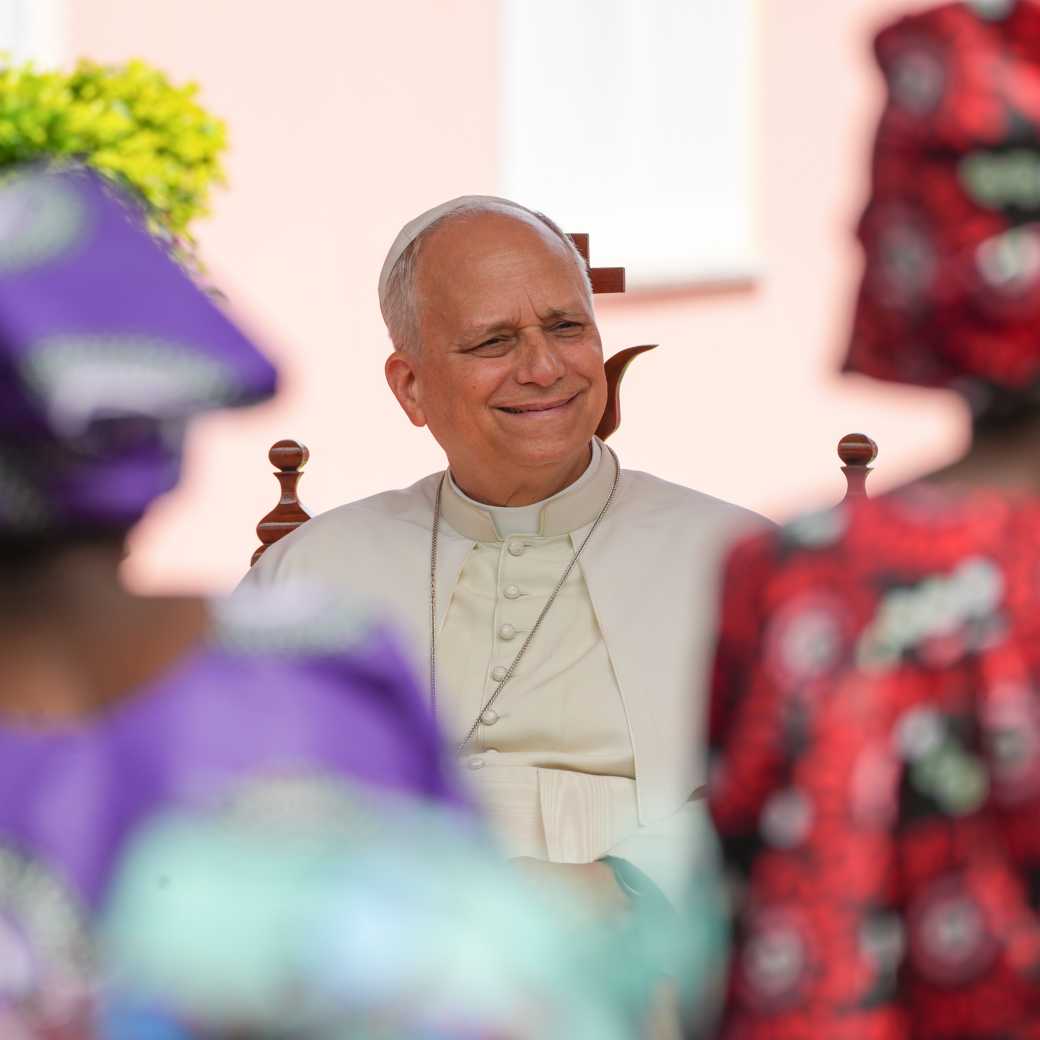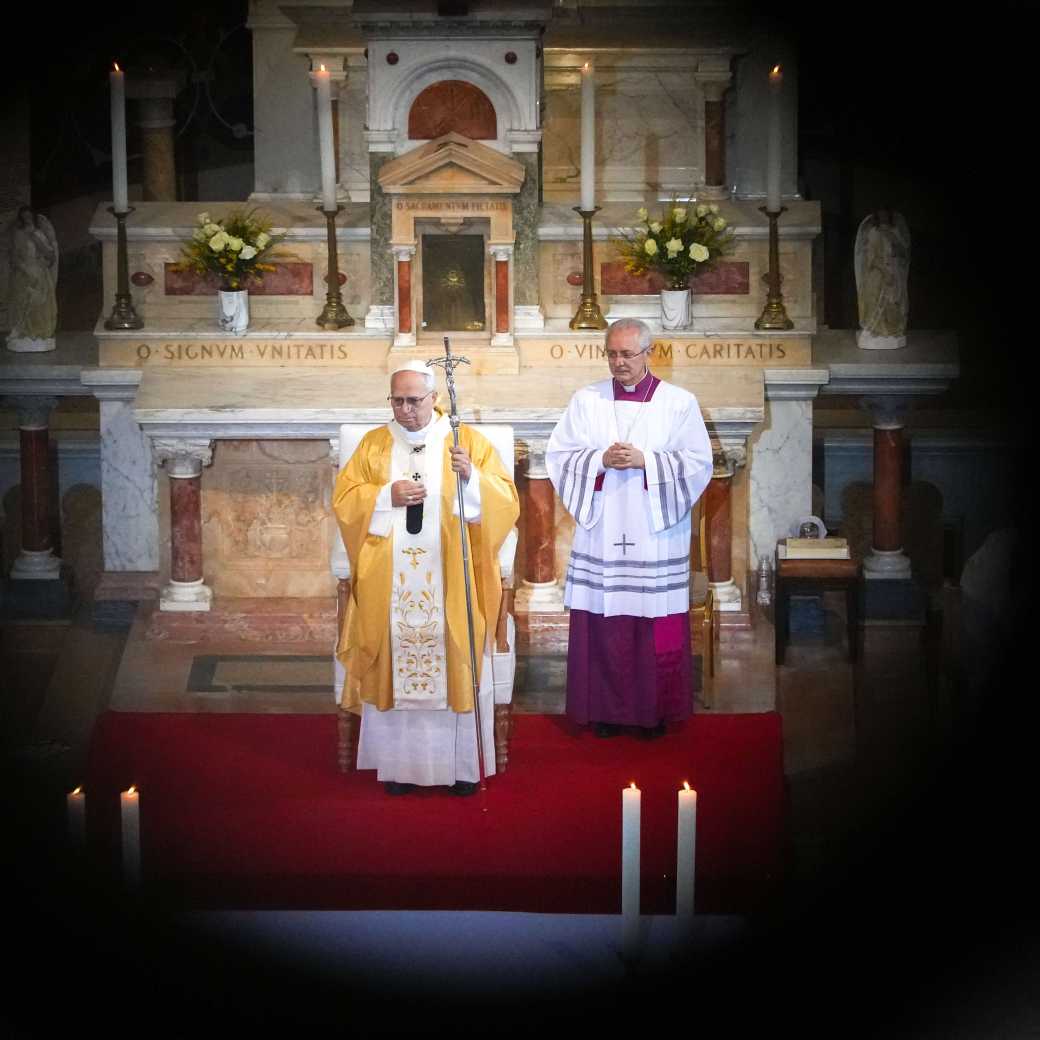
Pope Leo XIV cast Algeria as a quiet model of solidarity and charity, showing how everyday acts of mercy can lay the groundwork for peace.
Read the story here: Pope finds the embodiment of the ‘guiding principle above all’ in Algeria
Posted on 05/1/2026 05:30 AM (USCCB News Releases)
WASHINGTON - Pope Leo XIV has appointed Reverend Gary R. Studniewski and Reverend Robert P. Boxie, III, as auxiliary bishops of the Archdiocese of Washington. Bishop-elect Studniewski is a priest of the Archdiocese of Washington and currently serves as pastor of the Shrine of the Most Blessed Sacrament in Washington, D.C. Bishop-elect Boxie is a priest of the Archdiocese of Washington and currently serves as chaplain to Howard University in Washington, D.C.
At the same time, the Holy Father accepted the resignation of the Most Reverend Roy E. Campbell, 78, from the Office of Auxiliary Bishop of Washington. The appointments and resignation were publicized in Washington, D.C. on May 1, 2026, by Cardinal Christophe Pierre, apostolic nuncio to the United States.
The following biographical information for Bishop-elect Studniewski and Bishop-elect Boxie was drawn from preliminary materials provided to the U.S. Conference of Catholic Bishops:
Bishop-elect Gary R. Studniewski
Bishop-elect Studniewski is a priest of the Archdiocese of Washington and currently serves as pastor of the Shrine of the Most Blessed Sacrament in Washington, D.C. He was born on May 8, 1957, in Toledo, Ohio. He received an Army commission through the ROTC program at the University of Toledo in 1979, completing a Bachelor of Education degree in Biology. He served in various artillery assignments in the 82d Airborne Division Artillery (1980-1981), and then in the 3d Infantry Division Artillery, United States Army Europe (1983-1986), and from 1987 to 1989 he served in the Army’s Personnel Command in Alexandria, Virginia.
In 1989 Father Studniewski left active duty to enter seminary, and studied at the Pontifical North American College in Rome (1990-1995), earning both a Bachelor of Sacred Theology and Licentiate in Sacred Theology from the University of St. Thomas Aquinas in Rome. He was ordained a priest of the Archdiocese of Washington on June 24, 1995.
Bishop-elect Studniewski served as military chaplain from 1995-2014, retiring with the rank of colonel. His pastoral assignments in the Archdiocese of Washington have included: Assumption parish in Washington (2014-2016); St. Francis Xavier parish in Leonardtown, Maryland (2016-2017); St. Peter’s parish in Washington (2017-2022); and the Shrine of the Most Blessed Sacrament (2022 to present).
Bishop-elect Robert P. Boxie, III
Bishop-elect Robert P. Boxie, III is a priest of the Archdiocese of Washington and currently serving as chaplain to Howard University in Washington. Father Boxie was born on September 18, 1980, in Lake Charles, Louisiana. He earned a Bachelor of Engineering from Vanderbilt University (2002), a Juris Doctor from Harvard University (2007), and studied at the Pontifical North American College in Rome, earning a Bachelor of Sacred Theology (2015) and a Licentiate in Sacred Theology (2017) from the Pontifical Gregorian University. He was ordained to the priesthood on June 25, 2016.
Father Boxie’s pastoral assignments include: parochial vicar at St. Francis of Assisi parish in Derwood, Maryland (2016); and parochial vicar at St. Joseph parish in Largo, Maryland (2017-2020). Since 2020, he has served as chaplain at Howard University in Washington. Bishop-elect Boxie has also served as professor in the Archdiocese of Washington’s permanent diaconate program since 2018 and has been an assistant vocations director for the archdiocese since 2016.
The Archdiocese of Washington is comprised of 2,104 square miles in the District of Columbia and the State of Maryland.
###
Posted on 05/1/2026 05:30 AM (USCCB News Releases)
WASHINGTON – Pope Leo XIV has accepted the resignation of Bishop James A. Tamayo, 76, from the pastoral governance of the Diocese of Laredo, and has appointed Reverend John Jairo Gomez, as Bishop-elect of Laredo. Father Gomez is a priest of the Diocese of Tyler and currently serves as the vicar general of the diocese. The resignation and appointment were publicized in Washington, D.C., on May 1, 2026, by Cardinal Christophe Pierre, apostolic nuncio to the United States.
The following biographical information for Bishop-elect Gomez was drawn from preliminary materials provided to the U.S. Conference of Catholic Bishops:
Father Gomez was born on December 15, 1975, in Colombia. He received his master of divinity from the University of St. Thomas in Houston, Texas (2009), and a licentiate in canon law from the Pontifical Gregorian University in Rome (2012). He was ordained to the priesthood for the Diocese of Tyler on May 23, 2009.
His parish assignments after ordination include: pastor at Holy Cross parish in Pittsburgh, Texas (2012-2017); pastor at Christ the King parish in Kilgore (2017-2018); and pastor at St. Charles in Frankston (2018-2020). His assignments for the Diocese of Tyler include: judicial vicar (2014-2015); member of the diocesan presbyteral council (2014 to present);; member of the diocesan college of consultors (2015 to present); member of the board of directors for Catholic Charities of the Diocese of Tyler (2015 to present); member of the diocesan review board (2017 to present); member of the East Texas Catholic Foundation Board of Directors (2017 to present); member of the board of directors for the diocesan priest retirement plan (2017-2022); diocesan director of the Pontifical Mission Societies (2017 to present); member if the Catholic Association of Diocesan Directors of Hispanic Ministry (2022 to present); delegate of the apostolic administrator (2023-2025). He served as vicar general and moderator of the curia for the Diocese of Tyler from 2015 to 2023 and has also been serving in the role again from 2025 to present.
Bishop-elect Gomez is a native speaker of Spanish.
The Diocese of Laredo is comprised of 10,905 square miles in the State of Texas.
###
Posted on 05/1/2026 05:30 AM (USCCB News Releases)
WASHINGTON – Pope Leo XIV has accepted the resignation of Most Reverend Mark E. Brennan, 79, from the pastoral governance of the Diocese of Wheeling-Charleston, and has appointed Most Reverend Evelio Menjivar-Ayala, currently auxiliary bishop of Washington, as his successor.
The resignation and appointment were publicized in Washington, D.C. on May 1, 2026, by Cardinal Christophe Pierre, apostolic nuncio to the United States.
Bishop Menjivar-Ayala’s biography may be found here.
The Diocese of Wheeling-Charleston is comprised of 24,041 square miles in the State of West Virginia.
###
Posted on 04/29/2026 05:30 AM (USCCB News Releases)
VATICAN CITY (CNS) -- Pope Leo XIV wanted his journey to Africa to highlight the serious injustices continuing there and propose a message of peace to a world marred by conflict and violations of international law.
"At the same time, the apostolic journey gave people in Africa a chance to make their voices heard and to express the joy of being God’s people," he said.
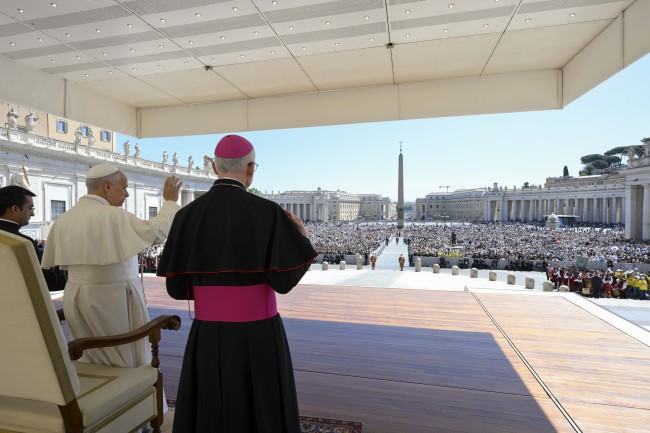
As had been customary by his predecessors, Pope Leo used his first general audience after his April 13-23 trip to four nations in Africa to tell people about the purpose of his visit and what struck him most about his travels.
Addressing thousands of people in St. Peter's Square April 29, Pope Leo said in English that his time there "was meant to offer the world a message of peace at a moment marked by conflicts and frequent violations of international law."
"Along with the call for peace, I also denounced the grave injustices that exist in those countries that are so rich in natural resources, urging the international community to overcome neo-colonial attitudes and engage in authentic collaboration," he said.
On his journey, the pope visited Algeria, Cameroon, Angola and Equatorial Guinea.
"From the very beginning of my pontificate, I have thought about a journey in Africa," he said in his main address in Italian. "I thank the Lord for granting me the opportunity to undertake it, as shepherd, to meet and encourage the people of God."
In Algeria, a predominantly Muslim country, the pope said he wanted to "show the world that it is possible to live together as brothers and sisters, even of different religions, when we recognize ourselves as children of the same merciful Father."
The northern African country is also the birthplace of his "spiritual father," St. Augustine, and by "revisiting the roots of my spiritual identity," it offered a way to highlight his legacy, he said. "He is a master in the search for God and for truth. A testimony that is more important than ever today for Christians and for every person."
The other three countries were predominantly Christian, he said, and "I, therefore, found myself immersed in an atmosphere of celebration of the faith."
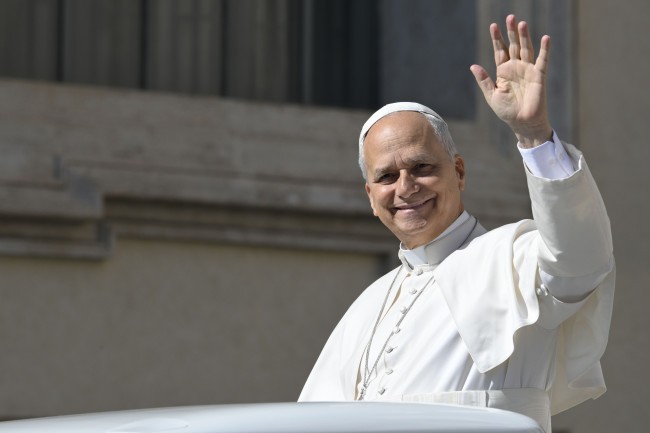
It was also a bit similar to "what happened to Jesus with the crowds in Galilee: He saw them thirsting and hungry for justice and proclaimed to them: 'Blessed are the poor, blessed are the meek, blessed are the peacemakers,'" the pope said, "and, recognizing their faith, (Jesus) said, 'You are the salt of the earth and the light of the world.'"
In Cameroon, he told the crowds in St. Peter's Square, he reinforced the call to work together for reconciliation and peace.
Like the rest of the continent, Cameroon is rich in natural and human resources, he said, but there needs to be: "a fair distribution of wealth"; more opportunities for young people; an end to "endemic corruption"; the promotion of integral and sustainable development; and a stop to "the various forms of neo-colonialism with far-sighted international cooperation."
In Equatorial Guinea, he said, the people "have weathered the vicissitudes of their history" and "renewed with great enthusiasm their determination to walk together towards a future of hope."
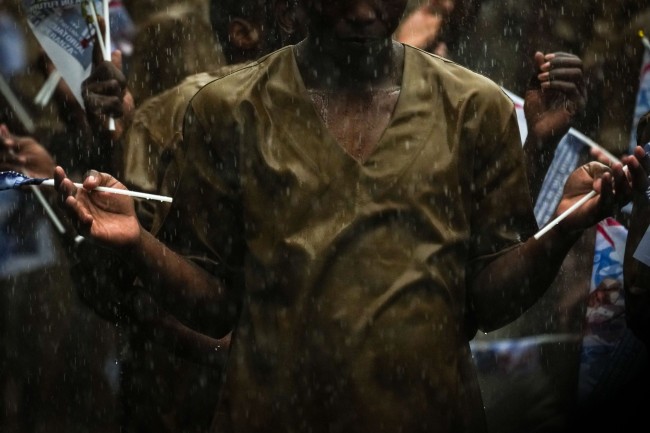
"I cannot forget what happened in the prison in Bata," he said, saying he "had never seen anything like it."
"The prisoners sang at the top of their voices a song of thanksgiving to God and to the pope, asking him to pray 'for their sins and their freedom,'" and then "they prayed the 'Our Father' with me in the pouring rain. A genuine sign of the Kingdom of God!"
Remarking on Angola overcoming its troubled period of civil war, the pope said, "God has guided and purified the Church, increasingly converting her in the service of the Gospel, human promotion, reconciliation and peace. A free Church for a free people!"
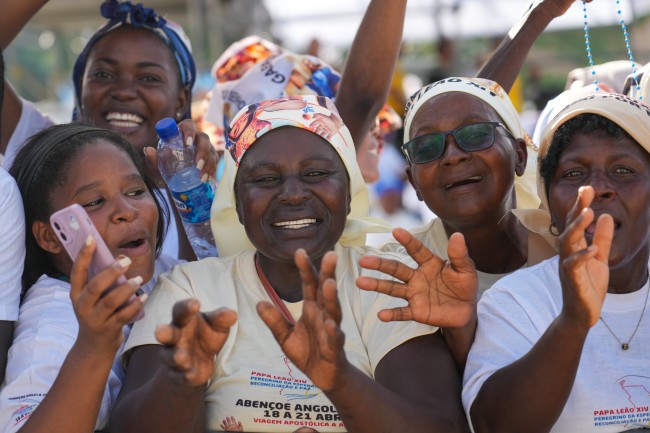
Seeing the joy and unity of the different generations and vocations of the Catholic faithful, the pope said he witnessed "the foundation of a hope that withstands the disappointments caused by ideologies and the empty promises of the powerful."
"This hope demands concrete commitment, and the Church has the responsibility, with the witness and courageous proclamation of the Word of God, to recognize the rights of all and to promote their actual respect," he added.
Whenever a pope visits a country, it is a chance for the people to have their voices be heard and for Catholics to "express the joy of being God’s people and the hope for a better future, of dignity for each and every one," he said. "I am happy to have given them this opportunity, and at the same time I thank the Lord for what they have given me, an inestimable treasure for my heart and my ministry."
- - -
Check out CNS's coverage of this memorable trip below:
Pope Leo XIV cast Algeria as a quiet model of solidarity and charity, showing how everyday acts of mercy can lay the groundwork for peace.
Read the story here: Pope finds the embodiment of the ‘guiding principle above all’ in Algeria
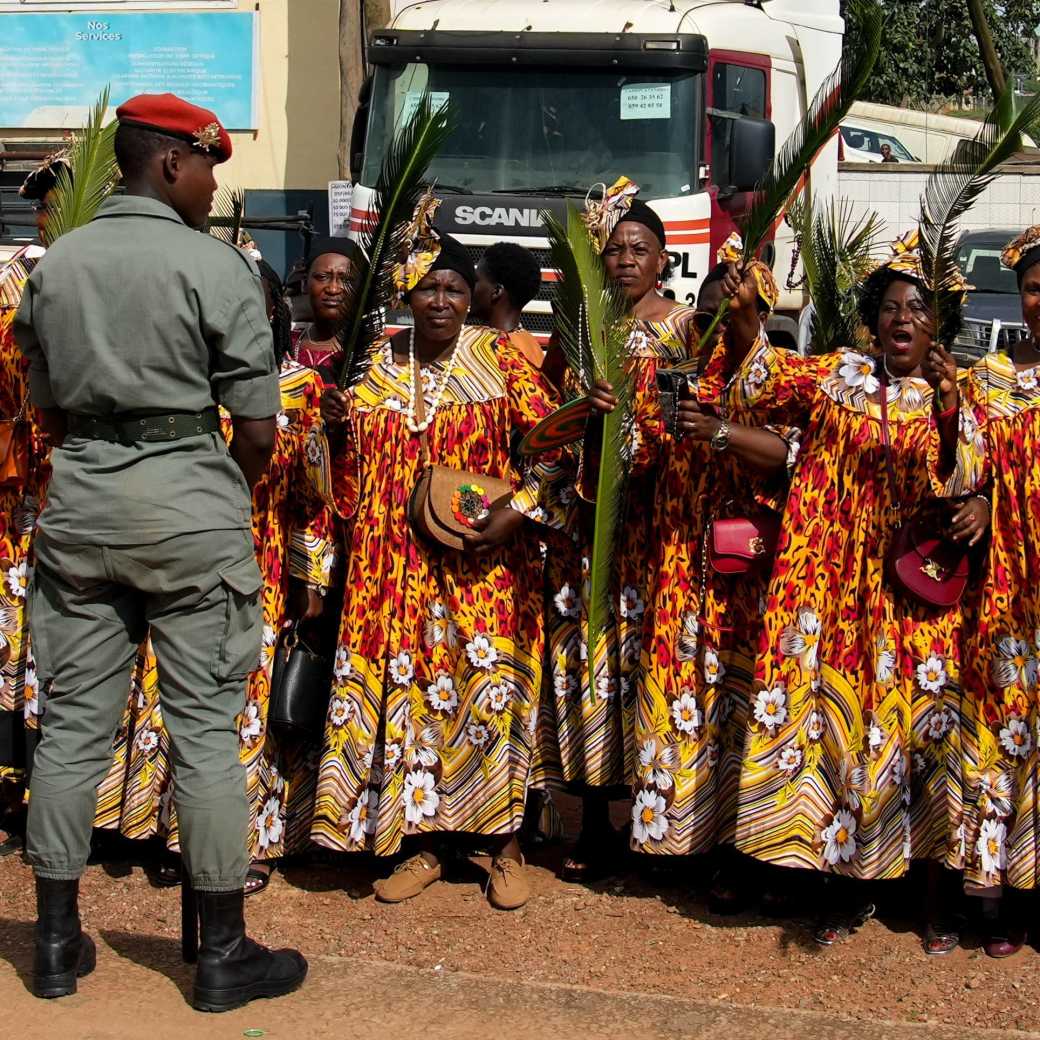
Cameroonians recount abductions, killings and constant fear during Pope Leo's visit to their country as he presses for urgent action, moral leadership and peace.
Get the full story here: With candor, Pope Leo confronts Cameroon's ongoing abductions, killings in plea for peace
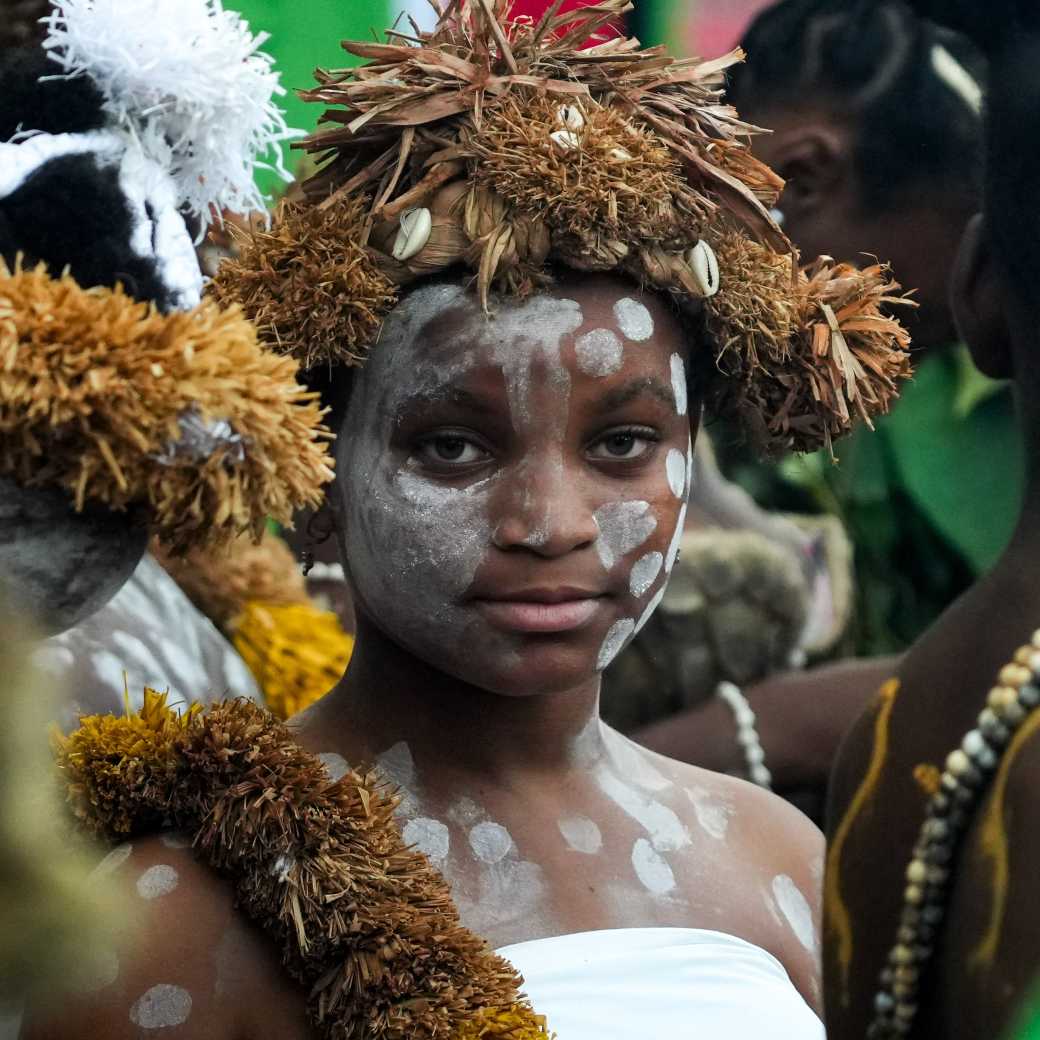
Pope Leo tempers earlier criticism of corruption, instead framing calls for justice and dignity through moral and theological terms during tightly managed visit.
Read here: With outcries against corruption throughout Africa, pope softens speech in Equatorial Guinea
Posted on 04/26/2026 05:30 AM (USCCB News Releases)
WASHINGTON - Following the news of the shooting at the White House Correspondents’ Association dinner, Archbishop Paul S. Coakley, president of the U.S. Conference of Catholic Bishops (USCCB) offered the following statement:
“We are grateful the lives of the President, those who protect him, and everyone in attendance last night were spared from serious harm. Let us all pray for our elected leaders and public officials that they may receive God’s blessings. Because human life is a precious gift, there is no room for violence of any kind in our society.”
###
Posted on 04/26/2026 05:30 AM (USCCB News Releases)
VATICAN CITY (CNS) -- More than just a good metaphor, the "good shepherd" is a concrete role model for Christian leadership.
"The fathers of the Bible" -- those, like Abraham, Jacob, Isaac, Moses and David -- who God chose to lead his people, "are all shepherds of sheep," in the real sense that they spent years with staff in hand feeding, protecting and caring for wooly ruminants, said Sister Elena Bosetti, a member of the Sisters of Jesus Good Shepherd.
Just as Jesus told the fishermen Simon Peter and Andrew to become fishers of men, God transformed his chosen shepherds of sheep in the Old Testament into pastors of people, she said, showing sheep husbandry as a kind of internship program for God's leaders.
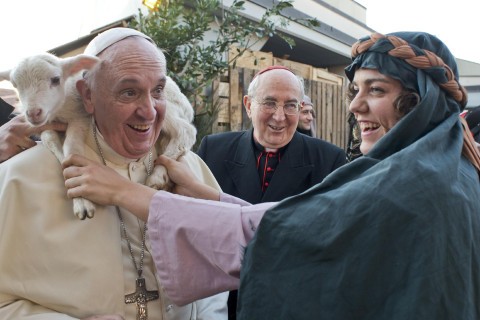
The Old and New Testaments are replete with imagery of sheep and shepherds, and Pope Francis gave these figures renewed emphasis, most notably with his memorable insistence to priests and bishops to spend more time among the people and be "shepherds living with the smell of sheep."
Pope Leo XIV ordained 10 priests on Good Shepherd Sunday, April 26, in St. Peter's Basilica, telling them the people they will serve "inhabit pastures that you must come to know" so they can find the many people who feel lost and help lead them "beside still waters."
The priest’s service, Pope Leo said later before praying the Regina Coeli with those gathered in the square, mirrors what Jesus has said, "that he is bound to us by a relationship of friendship, for he knows us, calls us by name, guides us, and -- just as the shepherd does with his sheep -- searches for us when we are lost and binds up our wounds when we are sick."
Sister Bosetti, a professor and biblical scholar specializing in pastoral symbolism, told Catholic News Service in 2015, that, unlike the secular logic of power, the Christian model of leadership and authority is rooted in the process of making oneself similar to, not separating or differentiating oneself from, the people to be served.
In fact, it takes a real shepherd years of being with the flock every day to gain their trust, said Fabrizio Innocenzi, who once owned about 60 sheep in the hills of Roviano, 40 miles east of Rome.
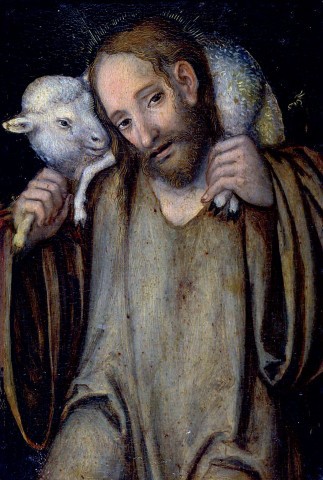
Sheep "at first glance seem docile, simple, but they're not. They're very complicated and need lots of care and attention," he had told CNS.
"They need a guide, a shepherd" because there is no natural leader or hierarchy within their group, he said. Their movements are dictated by what the others are doing around them, creating a kind of "domino effect" that can easily break into panic if just one sheep gets spooked, he said.
The role of the shepherd and the sheep dog are essential then, he said, to keep the sheep calm and away from danger such as steep cliffs, roads, cars, wrong turns and predators.
The sheep learn to trust the shepherd, Innocenzi said, as "they hear and understand the voice, the smell, the behavior of the person who is looking after them every day.
He said a shepherd needs to be someone who is "in tune with nature, decisive" and willing to lovingly bear the long hours, inclement weather, hard work and sacrifice and they should "not be afraid of anything."
The trust that develops is forged not out of fear, he said, but from the instinctual knowledge that the shepherd and the sheep dog are there not to punish, but to keep them safe.
"For them, the dog represents security" and makes them "feel at ease and peaceful."
In a similar way, Sister Bosetti said, pastoral leadership is about offering "comfort, consolation and encouragement," while being "in the midst of the sheep, defending them, assuring them, 'I am here, do not be afraid.'"
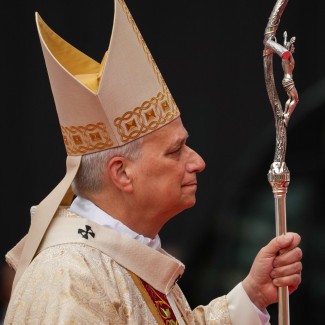
The shepherd's staff, for example, "is not used for hitting," she said. It provides the shepherd with the support he needs to clamber over rough and steep ground, and it lets the sheep, whose view is limited with their low hanging heads and eyes focused on grass to graze, know their guide is there as the staff rhythmically strikes the ground.
"If I hear 'thud, thud,' it means that he is here. Maybe I don't see him, but I hear him, his voice, his staff. In the Bible, it is not the eye, it's the ear that's fundamental. The sheep listen. The ear is the essential organ for knowing God," she said.
In Psalm 23, she said, "The Lord is my shepherd," who fulfills every need, who leads, restores and guides, and whose "rod and staff comfort me" because they are used to conquer evil and not to abuse one's own flock.
The saving power of the pastoral staff is further evident with Moses, she said. Through God's intercession, Moses uses his shepherding stick to part the Red Sea and lead his people to safety, as well as to split rocks in the desert so water gushes forth to quench people's thirst.
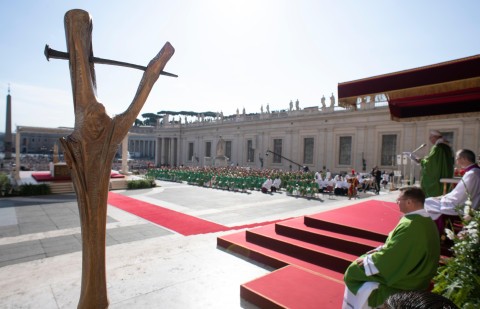
The humble shepherd's stick "is turned into God's presence, it performs miracles," she said.
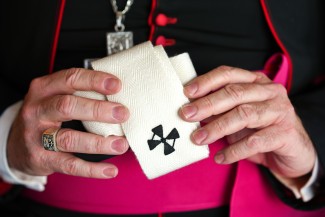
The Catholic Church uses more than just a bishop's crook or staff to communicate his role as shepherd. Archbishops receive a pallium, a narrow band made of wool with long strips hanging down the front and the back, tipped with black silk to recall the dark hooves of the sheep the archbishop is symbolically carrying over his shoulders.
The pallium is meant "to restore, to actualize the symbol, to remember that it's not about having another garment. No, you have to remember that pastoral ministry is carrying the flock on your shoulders," she said.
Sister Bosetti's order, the Sisters of Jesus Good Shepherd, are also known as the "Pastorelle," the little shepherdesses, to underline the importance of women religious in the pastoral mission of Christ.
Women shepherds appear often in the Bible, she said; and encouraging their pastoral side isn't about ordination to the priesthood, but about collaboration and complementarity.
Taking care of God's people "must not be reduced to the priesthood," she said. "We need a prophetic pastoral ministry" made up all faithful modeling the Good Shepherd himself: encouraging, consoling and leading the way forward with hope.
- - -
A version of this story was originally published in 2015.
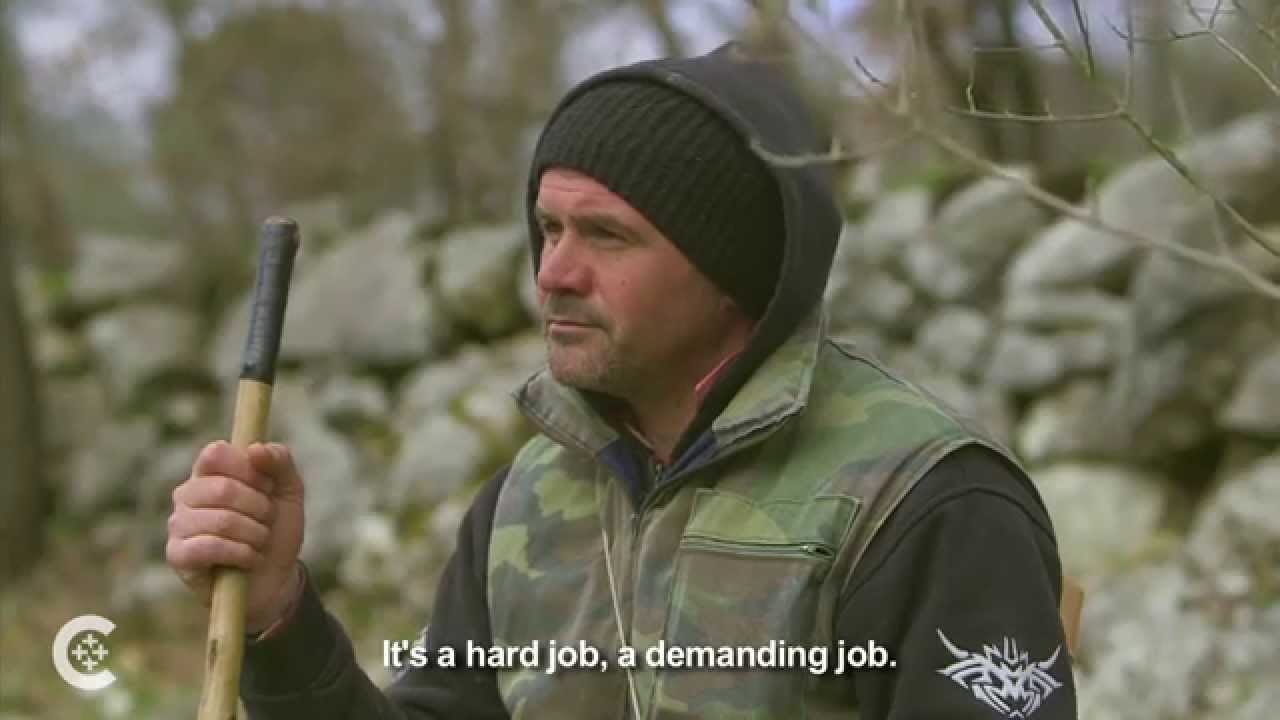
CNS followed and interviewed an Italian shepherd back in 2015 to hear about the qualities required in this job.
Posted on 04/25/2026 05:30 AM (USCCB News Releases)
ABOARD THE PAPAL FLIGHT FROM MALABO TO ROME (CNS) -- Pope Leo XIV, who has repeatedly called for peace and dialogue in the Middle East, went a step further April 23, condemning the unjust taking of life by governments as violence continues in Iran.
Speaking to reporters aboard the papal flight back to Rome after an 11-day trip to Africa, the pope said, "As a shepherd I cannot be in favor of war," while addressing the escalating conflict involving Iran.
Since the start of the conflict Feb. 28, when the United States and Israel launched strikes in Iran, more than 3,000 people have been killed, including an estimated 1,700 civilians, according to human rights groups and Iranian media. A fragile ceasefire remains in place, even as tensions continue to rattle global markets and oil flows through the Strait of Hormuz.
Until now, Pope Leo had limited his public remarks on the conflict to appeals for peace and dialogue. On the return flight, however, he directly addressed the moral implications of state violence.
"If there is regime change or no regime change, the question is how to promote the values in which we believe without the death of so many innocents," he said, responding in Italian. "The question of Iran is evidently very complex."
Responding to a similar question in English, asking whether he directly condemned the reported state violence aimed at Iran's citizens, he said, "I condemn all actions that are unjust. I condemn the taking of people's lives. I condemn capital punishment. I believe that human life is to be respected and that all people, from conception to natural (death), their lives should be respected and protected."
"So when a regime, when a country takes decisions which takes away the lives of other people unjustly, then obviously that is something that should be condemned," he said.
Continuing his broader call for peace rooted in dialogue, he said in Italian, "I would like to encourage everyone to make efforts to look for answers that come from a culture of peace and not from a place of hate and division."
The comments came after a week of criticism from U.S. President Donald Trump, who said the pope was "terrible for foreign policy" and questioned his stance on the conflict. Pope Leo declined to engage directly.
"I have no intention of getting into a debate," he said April 18, adding that he would continue to advocate for peace.
Throughout the in-flight press conference April 23, the pope also reflected on themes that emerged during his Africa trip, including governance, and he answered questions on migration and the blessing of same-sex couples.
The pope reaffirmed the position spelled out in the Dicastery for the Doctrine of the Faith's publication of "Fiducia Supplicans" ("Supplicating Trust"), which allows Catholic priests to bless a same-sex or other unmarried couple. However, it cannot be a formal liturgical blessing, nor give the impression that the church is blessing the union as if it were a marriage.
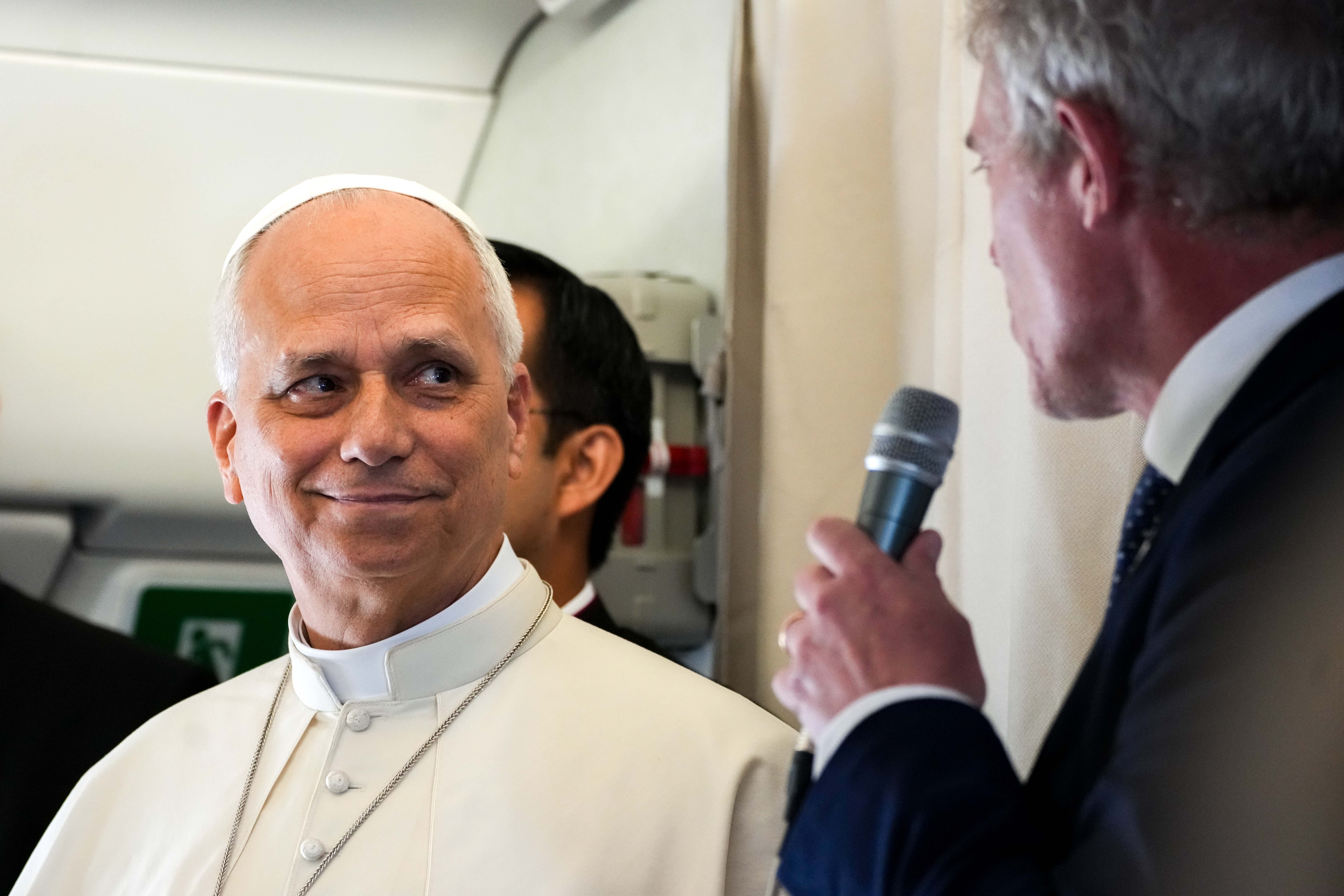
The pope was asked how he intended to preserve the unity of the global church on the matter, given a recent decision by Cardinal Reinhard Marx of Munich and Freising to allow priests to bless same-sex couples in his archdiocese, and the clear opposition to such practices by a number of church leaders, particularly in Africa.
"First of all, I think it's very important to understand that the unity or division of the church should not revolve around sexual matters," he said.
"We tend to think that when the church is talking about morality, that the only issue of morality is sexual, and in reality, I believe there are much greater and more important issues, such as justice, equality, freedom of men and women, freedom of religion, that would all take priority before that particular issue," he said.
Pope Leo underlined that the Vatican does not agree with "formalized" blessings of homosexual couples or couples in "irregular situations," as is spelled out in the Vatican document.
He recalled the meaning behind Pope Francis' expression of "todos, todos, todos," meaning "everyone," as being "an expression of the church's belief that all are welcome, all are invited, all are invited to follow Jesus, and all are invited to look for conversion in their lives."
"To go beyond that today, I think that the topic can cause more disunity than unity, and that we should look for ways to build our unity upon Jesus Christ and what Jesus Christ teaches," he said.
In another question, the pope defended the Vatican's practice of maintaining diplomatic relations with political leaders, including those criticized by human rights groups, saying such engagement can create opportunities to advocate privately for justice and humanitarian concerns.
"We are actually trying to find a way to apply the Gospel to concrete situations so that the lives of people can be improved," he said.
On migration, he questioned the role of wealthier nations in driving global inequality.
"What does the global North do to support the global South, and those countries where young people today find no future?" he said, pointing to economic disparities that fuel migration.
While acknowledging the right of nations to control their borders, he stressed that migrants must be treated with dignity.
"We need to treat human beings in a humanitarian way and not treat them worse than house pets," he said.
Posted on 04/24/2026 05:30 AM (USCCB News Releases)
MALABO, Equatorial Guinea (CNS) -- In the final leg of his apostolic journey to Africa, Pope Leo XIV struck a more measured tone, delivering a message to the faithful while navigating one of the continent's most politically sensitive environments.
Spending less than 48 hours in Equatorial Guinea -- a country of roughly 1.8 million people and among the least visited in the world by tourists -- the pope delivered five speeches and celebrated two Masses, emphasizing human dignity while avoiding the sharper political language that marked earlier stops on his trip.
The Central African nation, which includes a mainland territory and several islands, has remained relatively isolated due mostly to its strict visa requirements and limited tourism infrastructure. Public criticism of the government is rare, and President Teodoro Obiang Nguema Mbasogo has ruled since 1979, making the 83-year-old one of the world's longest-serving leaders.
With a trip that began in Algeria, Cameroon and Angola, Pope Leo urged leaders, who have all faced criticism from human rights groups over political freedoms, to break free from the "chains of corruption." In Equatorial Guinea, however, those same themes surfaced in more indirect ways.
Speaking at the presidential palace in Malabo to Obiang and the diplomatic corps April 21, the pope warned against "the will to dominate, arrogance or discrimination," adding that God's name "must never be invoked to justify choices and actions of death." While he did not explicitly call out political leaders, his language was more nuanced, quoting Scripture, Catholic leaders, saints, and his predecessors.
He also encouraged the country to "position itself on the international stage in the service of law and justice," but stopped short of the more direct critiques heard earlier in the trip.
That balance between moral clarity and diplomatic restraint continued throughout the visit.
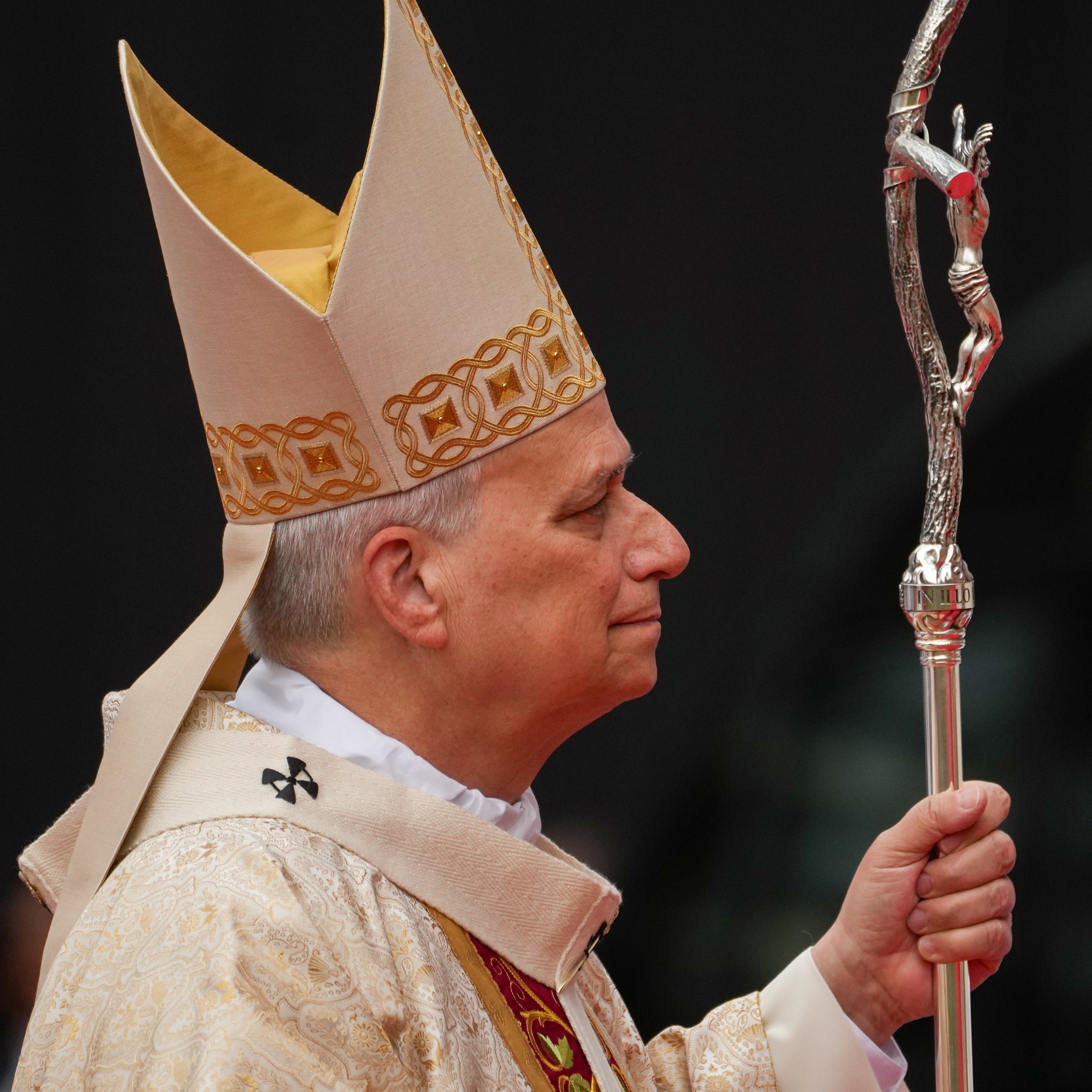
At a Mass in Mongomo attended by more than 100,000 people April 22, the pope framed the country's future as a shared responsibility, telling the faithful, "The future of Equatorial Guinea depends upon your choices; it is entrusted to your sense of responsibility and to your shared commitment to safeguarding the life and dignity of every person."
The caution reflected the country's broader context. Since the mid-1990s, Equatorial Guinea has become one of sub-Saharan Africa's largest oil producers, giving it one of the highest gross national incomes per capita on the continent. Yet that wealth remains deeply unevenly distributed. According to the World Bank, more than half the population lives on less than $8.30 a day, 24% of the population lacks electricity and 32.4% have no access to piped water.
Human rights groups have long raised concerns about governance in Equatorial Guinea, which consistently ranks among the lowest globally for political freedoms, while prison conditions have been described as life-threatening. Transparency International ranked the country 173rd out of 180 countries in its 2024 Corruption Perceptions Index.
Ahead of the papal trip, some media outlets reported that the cost of Pope Leo's arrival was put upon the people. Agence France Presse reported that civil servants said their income was lower in February. The amount docked ranged from 20,000 to 55,000 CFA francs ($34-$95), depending on salaries, according to several testimonies. The government issued a statement in response last month, saying these reports were inaccurate and misleading.
Those reports added to a broader backdrop of economic inequality and limited transparency in public life.
The pope returned repeatedly to themes of inequality and exclusion, warning against the concentration of wealth and urging that the country's natural resources become "a blessing for all," echoing broader concerns without directly naming those responsible.
The pope was more cautious in his tone, and the atmosphere surrounding the visit mirrored that restraint.
In Malabo and beyond, large buildings stood widely spaced and often sparsely populated, contributing to a sense of distance. Journalists traveling with the papal delegation noted that while encounters with locals were polite, many people were reluctant to engage beyond brief exchanges, and enthusiasm for media interaction appeared limited.
That dynamic contrasted with some of the pope's previous stops in Africa, where crowds were more openly expressive and his own language more direct.
Yet in more personal settings, the pope's tone shifted noticeably.
At a visit to the Jean-Pierre Olié Psychiatric Hospital, the pope appeared at ease, spending extended time listening to patients' stories, shaking hands and posing for selfies with families and staff. The April 21 encounter stood out as one of the most visibly warm moments of the trip.
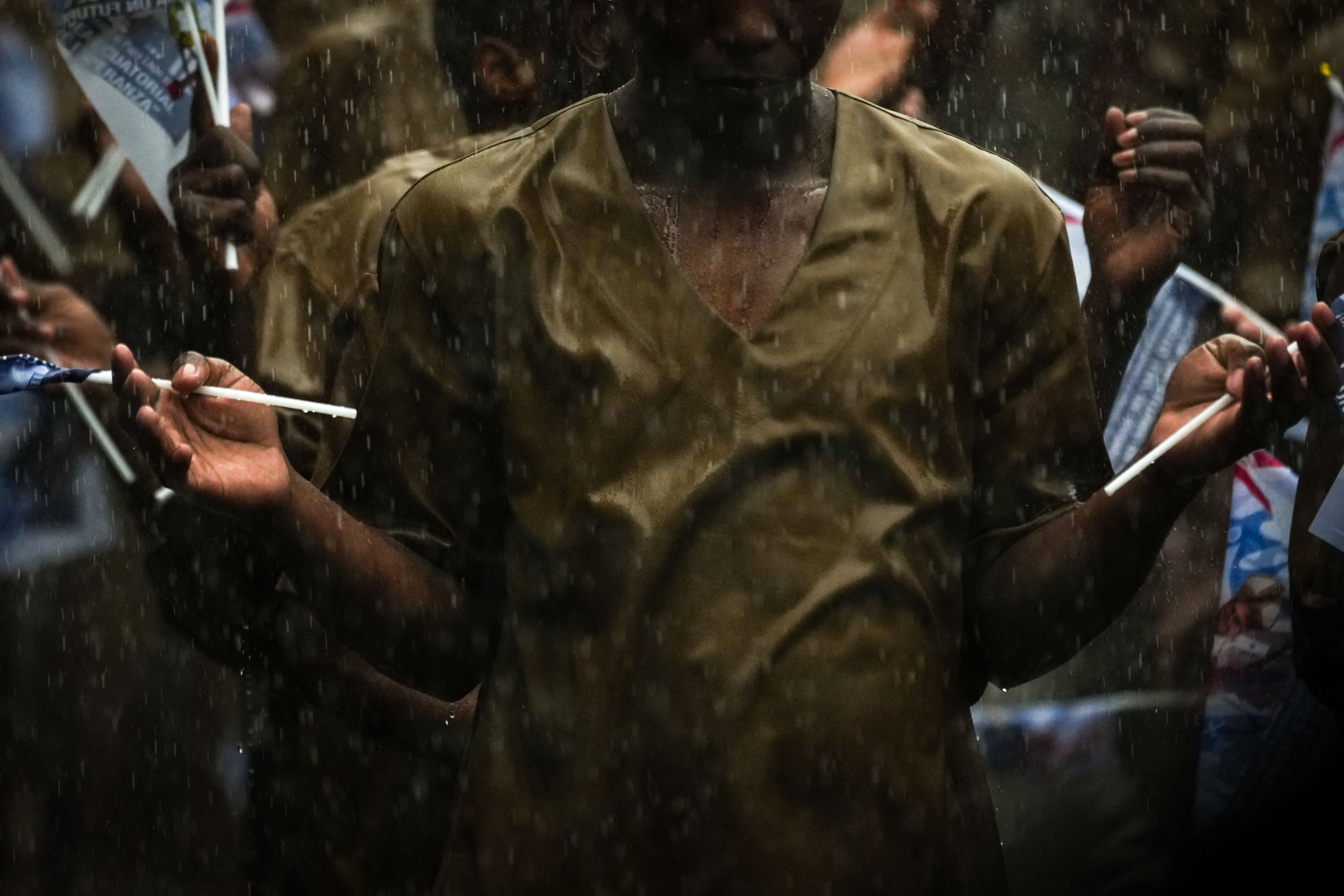
In one of the most emotional stops of his trip to Africa, Pope Leo visited Bata Prison, where human rights reports have documented serious allegations of abuse in detention facilities.
A U.S. State Department's 2023 human rights report on the country said that "lawyers and other observers who visited prisons and jails reported serious abuses, including beatings, sleep deprivation, use of car batteries to shock and inflict pain, and withholding of food, liquids, and medical treatment."
Amnesty International reported in 2021 that hundreds of prisoners have ended up in detention with no way of receiving visits from their lawyers and families. Pope Leo seemed to allude to that situation when he told the prisoners, "You are not alone. Your families love you and are waiting for you. Many people outside these walls are praying for you. If any of you fear being abandoned by everyone, know that God will never abandon you, and that the Church will stand by your side."
During the visit, male and female prisoners with shaved heads gathered in the prison courtyard, standing in formation even as heavy rain began to fall. Officials moved under shelter while inmates remained in the rain. At one point, prisoners performed a coordinated dance for the visiting pope, who watched and smiled politely.
Even in this setting, Pope Leo's remarks focused on reconciliation rather than confrontation. Speaking during the visit on April 22, he said, "True justice seeks not so much to punish as to help rebuild the lives of victims, offenders and communities wounded by evil."
At the final Mass in Africa, the pope turned to the day's first reading, which carried unmistakable resonance.
Reflecting on the passage regarding Philip and the conversion of the wealthy Ethiopian official in the Acts of the Apostles, he described a man whose wealth is "not his own," whose life is "placed at the service of a power that controls and rules over him," and who returns to "a place of servitude." When he returns to his homeland of Africa, the pope said, eventually, "the proclamation of the Gospel sets him free."
"He steps into salvation history, which embraces every man and woman, especially the oppressed, the marginalized and the least among us," he told an estimated 30,000 people in his homily at the Malabo Stadium April 23.
The passage echoed the broader themes of dignity and liberation that ran throughout the visit.
Drawing on the biblical account of the tree of the knowledge of good and evil, Pope Leo told students and staff at the newly-named Leo XIV University Campus April 21 that the problem was not the pursuit of knowledge itself, but its "deviation towards an intelligence that no longer seeks to correspond to reality, but rather to twist it for its own purposes, evaluating it according to the benefit of the one who demands to know."
"Here knowledge ceases to be an opening and becomes instead a possession; it ceases to be the path towards wisdom and is transformed into a prideful affirmation of self-sufficiency, opening the road to confusion, which can eventually become inhumane," he said.
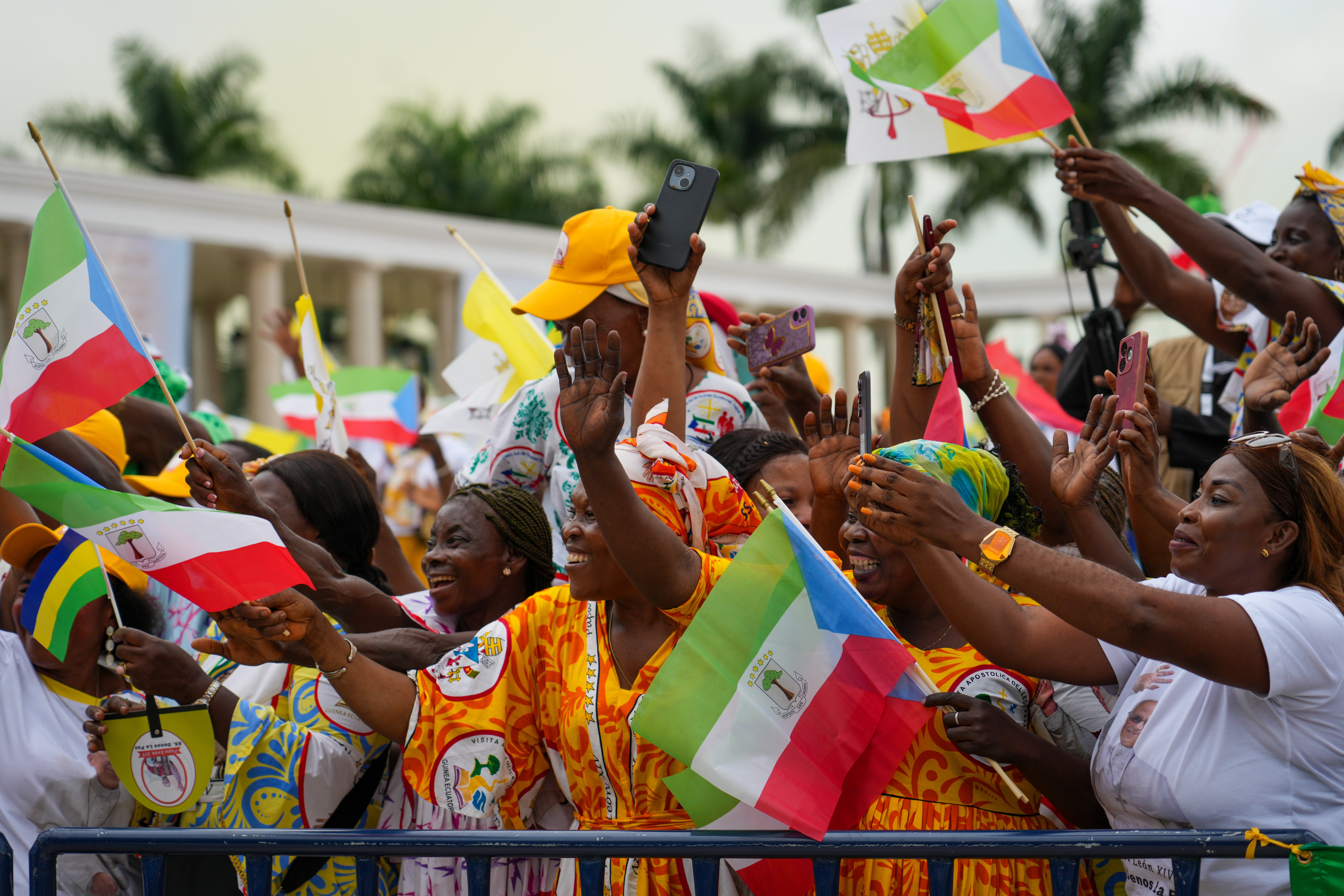
Still, the visit was not without moments of public enthusiasm.
At Bata Stadium, heavy rain fell as tens of thousands of young people and families gathered to see him. The downpour continued through most of the event, but the crowd remained.
"Who is afraid of the rain?" Pope Leo asked, drawing cheers from more than 50,000 attendees.
He urged them to build a society rooted in love, responsibility and care for the most vulnerable, saying such values could "transform the world -- even its structures and institutions -- so that every person is respected, and no one is forgotten."
The visit also carried historical resonance. St. John Paul II traveled to the country in 1982, just three years after Obiang took power following the "reign of terror" as most historians and human rights groups called his uncle's brutal regime, a period marked by widespread repression, military executions and murders, and mass exile.
St. John Paul had described the role of the president as "the symbolic center to which the living aspirations of a people converge" for justice, liberty and respect for human dignity. These words, Pope Leo told the diplomatic corps, "remain timely and that challenge anyone entrusted with public responsibility."
In his final comments in the country before embarking on a six-hour flight back to Rome, he quoted Pope Francis in warning of the dangers of a "complacent yet covetous heart."
"Whenever our interior life becomes caught up in its own interests and concerns, there is no longer room for others, no place for the poor," he said in his homily at Malabo Stadium.
"In the face of such closed attitudes, it is precisely the Lord's love that sustains our efforts, especially in the service of justice and solidarity," he said, encouraging the people to persevere as a people, united and active in a faith "that saves, so that God's word may become good leaven for all."
Posted on 04/22/2026 05:30 AM (USCCB News Releases)
LUANDA, Angola (CNS) -- When more than 100 villagers’ homes were torn down because they sat atop mineral-rich land, it was the Catholic Church that went to court.
The case, brought by a commission of the Catholic Bishops' Conference of Angola and São Tomé and Príncipe, resulted in new homes for displaced families in the southern province of Huíla, according to church officials.
Across Angola, church leaders say such interventions -- legal, advocacy and negotiations -- with mining companies are becoming more common.
As the Catholic Church’s global leadership increasingly looks to Africa as a wellspring of vitality and growth, communities across the continent are pressing it to take a clearer stand on one of their most urgent concerns: the human and environmental cost of mining.
In resource-rich regions like Angola, Catholic leaders are navigating a fraught reality, caught between governments and multinational mining companies on one side, and communities facing displacement, pollution and deepening poverty on the other.
In Angola, that responsibility has often fallen to the Church.
The bishops' Commission for Justice, Peace and Integrity of Creation works to ensure that affected communities’ voices are heard through advocacy, dialogue and, at times, legal action.
Jesuit Father Celestino Epalanga, undersecretary of the commission, has spent years working with communities impacted by mining projects.
Five years ago, the commission heard about the community impact of the government allowing mining companies to extract resources from the land peoples' homes were built on. The government's deal with the mining companies meant about 130 families in the area were displaced -- forced from their homes and their land, Father Epalanga told Catholic News Service April 20 in Luanda. The bishops’ conference hired an attorney to represent the communities in court, and a judge ruled the company had to build new homes for the affected families.
Father Epalanga said he has seen other communities poisoned, displaced and left without basic services.
"It’s been over 100 years that we are exporting diamonds, but there is nothing in the area, absolutely nothing -- no hospitals, no schools," he told CNS.
Mining across the Global South has expanded rapidly in recent years, driven in part by global demand for critical minerals used in batteries and clean energy technologies. According to the International Energy Agency, demand for lithium alone rose by nearly 30% in 2024.
Angola is one of Africa’s top diamond producers, with government figures showing output reached 15.2 million carats last year. The country is also an emerging hub for minerals such as copper, cobalt and lithium, and much of the country remains underexplored, as investment continues to grow. The country produces roughly 1.2 million barrels per day in oil, accounting for 95% of Angola's exports, according to the Chr. Michelsen Institute, a Norwegian research center.
The country has also become a key geopolitical player.
Angola’s Lobito Corridor serves as a major export route for minerals from the Democratic Republic of Congo and Zambia, which together supply the majority of the world’s cobalt and a significant share of its copper, both essential for modern technologies. This area provides access to an estimated 73% of the world’s cobalt, which is used in electric vehicles, smartphones and laptops, and 14% of the global production of copper, which is a primary material for electrical wiring.
That has drawn competing interest from global powers. The Chinese government and state banks have invested heavily in Angolan infrastructure, contributing an estimated $17 billion to $20 billion, while the United States government has backed development of the railway as part of its own strategic push in the region.
Yet for many Angolans, the benefits remain unclear. Local economists Alves da Rocha and Wilson Chimoco have warned that expectations that the resource wealth tied to the corridor will reach the people impacted by the mines remain "very low," in a published report in 2025.
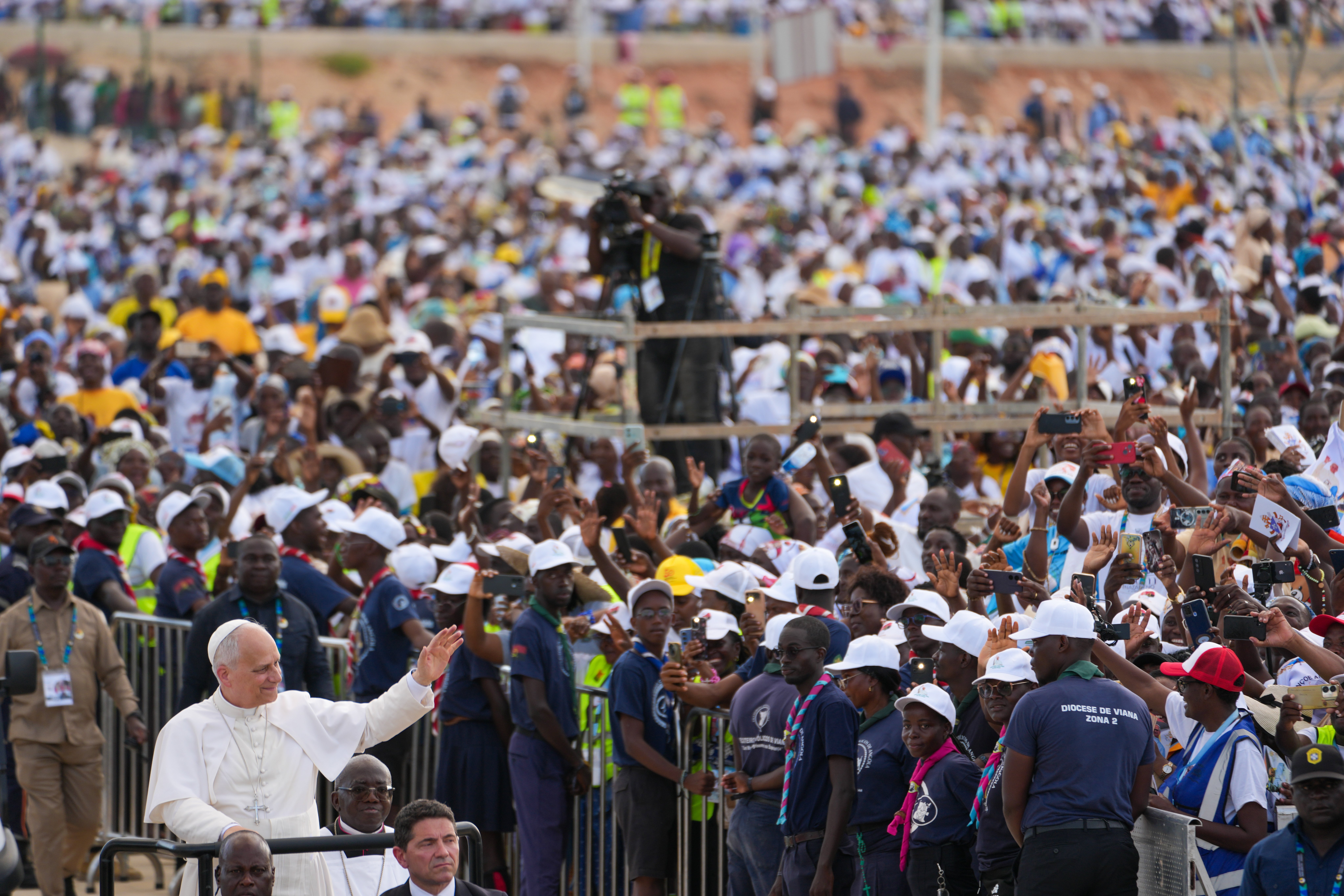
Throughout Pope Leo XIV’s multi-country tour of Africa, he has strongly urged countries to rethink their approach to exploitative mining industries that oftentimes does not benefit the poorest. Andin Angola, where more than 60% of the government’s revenue is dependent on oil and diamonds, this issue is especially relevant.
In his first stop in the county, Pope Leo echoed those concerns to Angolan President João Lourenço and the diplomatic corps April 18.
"You know well that all too often people have looked -- and continue to look -- to your lands in order to give, or, more commonly, in order to take," Pope Leo said to the diplomatic corps. "It is necessary to break this cycle of interests, which reduces reality, and even life itself, to mere commodities."
The pope was direct in his speech on the consequences: "How much suffering, how many deaths, how many social and environmental disasters are brought about by this logic of extractivism!"
He called for more economic justice in the country, where the inequality of wealth is high. An estimated 52 percent of those under the age of 25 are unemployed, according to some local media.
"All Angolans, without exception, have the right to build up this country and to benefit from it equitably," the pope told the diplomatic corps April 18 in Luanda. "Your people have suffered time and again when this harmony was violated by the arrogance of a few."
For many communities, the Church has become one of the only institutions integrated into remote villages across the mining-affected areas.
Cornélio Bento, a journalist and project coordinator with the bishops’ conference's commission, said the Church often acts as an intermediary between companies and communities.
In one village in Lunda Sul province, a river was polluted by mining waste, water that locals depended on for drinking, cooking and washing, Bento said.
In Mussolobela, another village, residents reported that nearby mining operations caused their homes to shake as heavy machinery moved closer. The bishops' commission helped organize residents and is now in dialogue with company representatives.
"This land is our way of life," Bento told CNS in an interview April 20.
The local church has also begun developing formal processes for communities to file grievances collectively, strengthening their ability to negotiate with companies. Bento learned about it when meeting with other Catholic activists in Africa working to support communities affected by mining.
Yet these efforts seem hampered by a lack of data.
Consolação Miguel, a lawyer with the bishops' commission, said obtaining reliable environmental and health data remains difficult. She told CNS that one of their top priorities is getting accurate risk assessments and environmental impact reports of mining activities that could show that recent health concerns in areas near mining projects are related to the extraction.
"If the fact they are dying is because of this contaminant, we don’t have a solid explanation," she told CNS in an April 20 interview in Kilamba. "We don’t have sources to prove that -- but we all know."
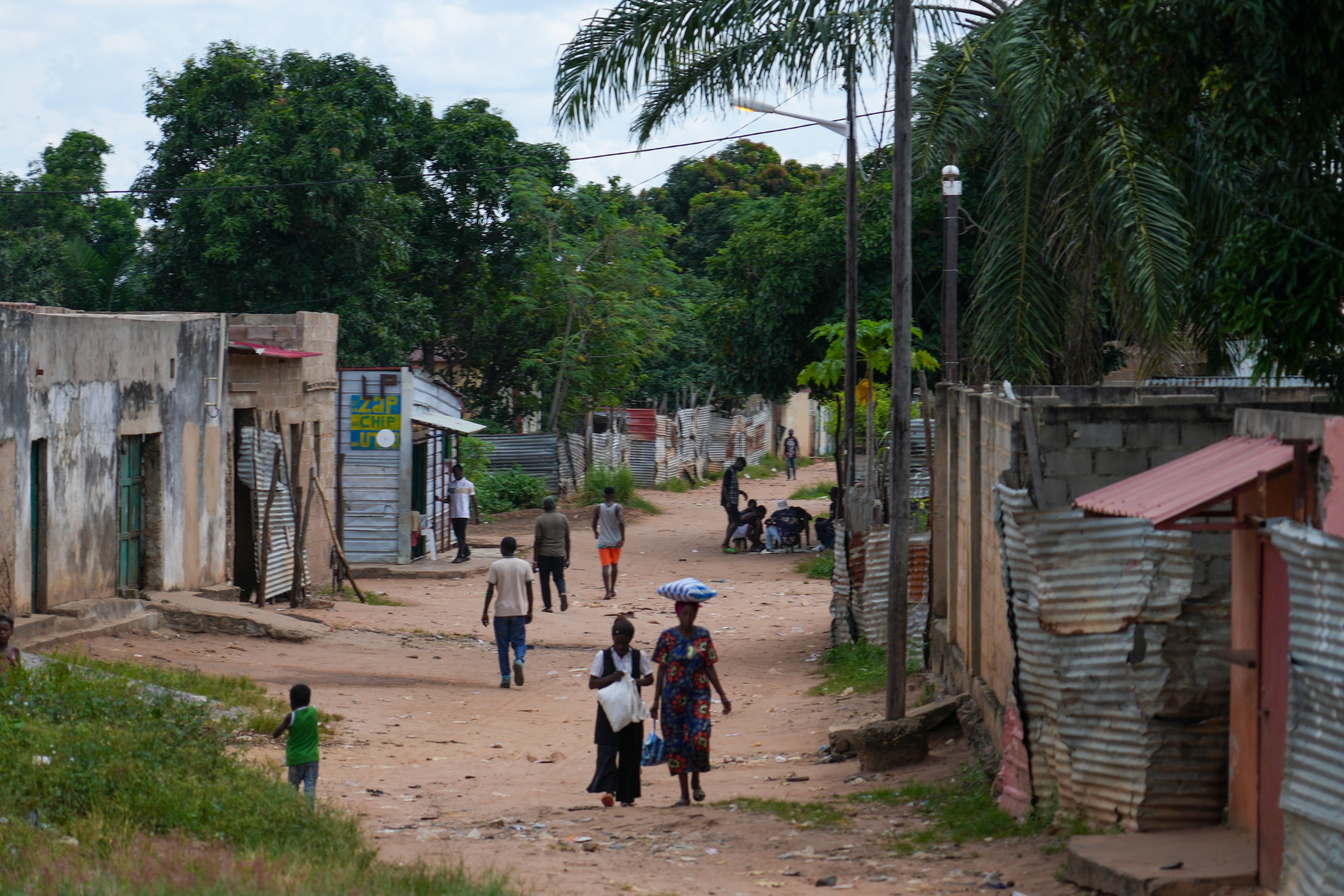
When asked if the church’s efforts had support from the government, Father Gabriel Cambala told CNS in Kilamba April 20: "We cannot categorically say, 'yes.' There is still resistance when it comes to dialogue between the Church and the local government -- significant resistance."
In 2025, Human Rights Watch reported that Angolan police were implicated in the killings, sexual violence, excessive use of force and torture of some activists and protesters. Some media have reported on the use of bullets to disperse crowds of protesters in the province of North Lunda.
For Father Epalanga, he said he will never forget going to Cafunfo in northeast Angola following a community protest of a mine that became violent.
He said they were chanting early in the morning against the diamond mining nearby. But then later, "They had people carry the corpses to a river nearby," the Jesuit priest told CNS.
In January 2021, the Angolan authorities classified this incident that resulted in the death of more than 30 people as a "rebellion and attempted robbery" in a police report in Cafunfo, some media reported. Even for some of those working with the local church, the issue is complex.
Father Cambala told CNS he speaks daily about the impacts of mining activities on the region where he works in north Angola. Once, there was hope that these companies would come and help develop the region with much-needed infrastructure, like hospitals and schools.
"What happens, however, is that the population benefits almost not at all -- nothing at all, in fact," he said while waiting for the pope to arrive in Saurimo in northeast Angola. "Many lives are destroyed, people are killed, and afterward, there is no justice for those families. No, no -- no one looks for the culprit, and the guilty are not punished."
The pope encouraged the Angolan authorities to invest in social services, especially those that support the most vulnerable, like the elder-care home he visited in Saurimo April 20.
"The care of the weakest is a very important sign of the quality of the social life of a nation," he told nursing home staff and authorities gathered there.
Many local clergy have taken it upon themselves to ensure that these villages have the resources they need to have a voice.
Some priests in affected regions have increasingly used their homilies to educate communities about their rights, while the bishops’ commission organizes workshops on environmental protection and legal recourse.
Pope Leo encouraged clergy, religious and catechists in his speech to them in Luanda April 20 to continue to share the church's social teaching, telling them it was "essential that, while interpreting current events with wisdom, you never cease to denounce injustices, offering solutions in accordance with Christian charity."
He reminded them that sometimes such witness may come at a cost: "When difficulties arise, remember the heroic witness of faith given by Angolans --men and women, missionaries born here or coming from abroad -- who had the courage to give their lives for this people and for the Gospel, preferring death to betraying the justice, truth, mercy, charity and peace of Christ."
Miguel, the attorney with the commission, said the goal is not confrontation, but accountability.
"We don’t have to fight with guns," she said. "We just fight with words, kind words, love words, Fathers’ words."
Church advocates say the pope’s visit has strengthened their efforts.
"This is the Gospel," Father Epalanga said. "He reminded us to take up this mission with seriousness."
During a Mass in Kilamba attended by an estimated crowd of 100,000, Pope Leo emphasized the Church’s responsibility to respond to suffering.
"The social and economic problems and the various forms of poverty call for the presence of a Church that knows how to walk alongside you and how to heed the cry of its children," he said.
For Bento, that message has been energizing for him as a journalist. His team is now developing a guidebook to bring to mining-affected communities, helping them understand their rights and organize collectively, and seeing Pope Leo’s recent speeches as encouragement for their work.
"The pope has brought to us a very powerful tool," he said. "We have to bring this as a pastoral teaching."
Father Cambala said the visit came at a critical moment.
"His speech touched the hearts of our leaders," he said. "We hope it will bear fruit, and that they will truly put into practice what they heard."
Posted on 04/21/2026 05:30 AM (USCCB News Releases)
WASHINGTON – “Vocations are a sign of God’s free gift of merciful love to a world in need of salvation,” said Archbishop Ronald A. Hicks, chairman of the U.S. Conference of Catholic Bishops’ (USCCB) Committee on Clergy, Consecrated Life and Vocations, in anticipation of the World Day of Prayer for Vocations on April 26. “We join in prayer for all disciples of Christ, especially young people, to experience the loving God, the Good Shepherd, who has a unique call for each person’s life,” he continued.
In conjunction with the World Day of Prayer for Vocations, the USCCB’s Committee on Clergy, Consecrated Life and Vocations released the Ordination Class of 2026 Study conducted by the Center for Applied Research in the Apostolate (CARA) at Georgetown University. According to this survey, four in five ordinands reported regular participation in Eucharistic adoration before entering the seminary. The full CARA report and profiles of the Ordination Class of 2026 may be found here.
In his message for the World Day of Prayer for Vocations, Pope Leo XIV extends an invitation to all, not just clergy and those in religious life, to commit to creating conditions that allow the gift of vocations to be embraced, nourished, protected and accompanied, so that it may bear abundant fruit. “Only when our surroundings are illumined by living faith, sustained by constant prayer and enriched by fraternal accompaniment can God’s call blossom and mature, becoming a path of happiness and salvation for individuals and for the world,” he says.
This year’s CARA report was sent out to the 428 men scheduled to be ordained this year. 334 completed the survey for an overall response rate of 78%. These ordinands represent 110 U.S. dioceses and eparchies and 34 distinct religious institutes.
A few of the major findings of the report are:
###